

IN THIS BI-WEEKLY ISSUE
🏥 Why Ice Packs Create Temperature Risks
🆒 Validation Matters More Than Ice
⌛ Command Starts with Organization
🦺 Organized Response Starts Here
NEWS • RESOURCES • TIPS
WHY ICE PACKS CREATE TEMPERATURE RISKS
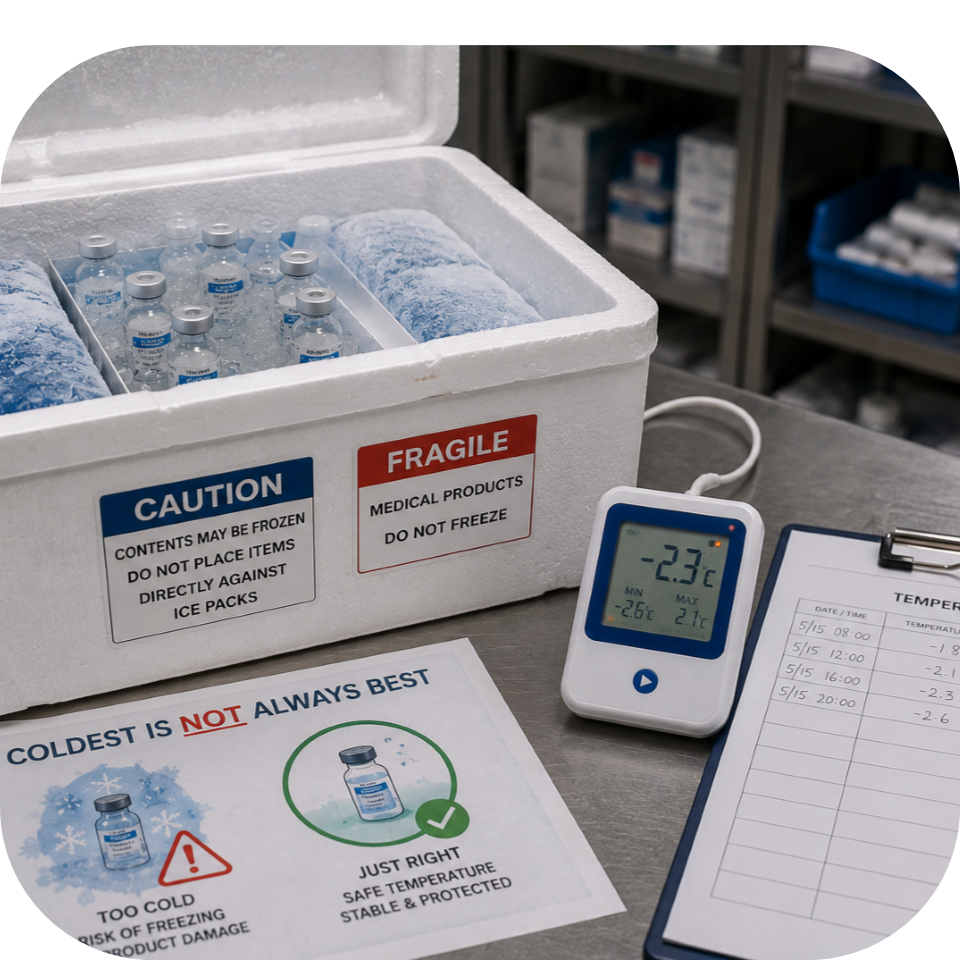
Colder Isn’t Always Better
Ice packs have long been used to keep vaccines, specimens, medications, and blood products cold during transport. The problem is that frozen ice packs often create temperatures below the safe storage range, especially when products are placed directly against them.
A shipment can arrive looking perfectly cold while sensitive materials have already been damaged by freezing. Proper insulation, payload spacing, and validated temperature-control methods maintain stable temperatures throughout transport instead of exposing contents to unnecessary temperature swings.
Understanding the difference between keeping products cold and maintaining the correct temperature reduces transport uncertainty before a shipment ever leaves your facility.
COLD CHAIN & EMERGENCY PREPAREDNESS
COOL CUBE™ SPOTLIGHT
Validation Matters More Than Ice
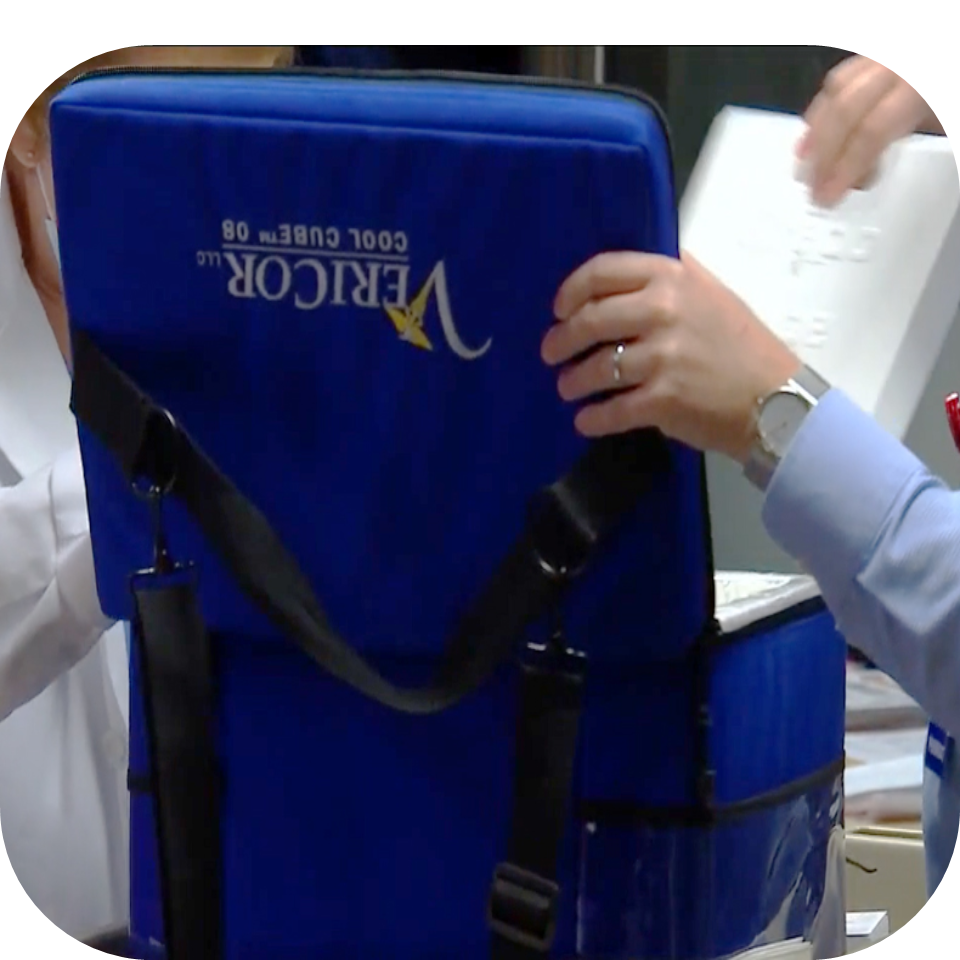
Anyone can pack a cooler with ice. Maintaining the required temperature from departure through delivery is far more difficult.
Cool Cube™ passive temperature-controlled medical coolers maintain temperature integrity using phase change material panel and vacuum insulated panel technologies rather than loose ice and common insulation. The result is consistent transport performance that supports defensible specimen, vaccine, medication, and blood-product transport under real-world conditions.
Independently validated to ISTA 7D standards and Category B drop-tested, Cool Cube™ gives healthcare organizations confidence that transport procedures remain consistent when scrutiny increases.
RESPONSE-FRIENDLY™ HICS/MICC SYSTEMS
Command Starts with Organization
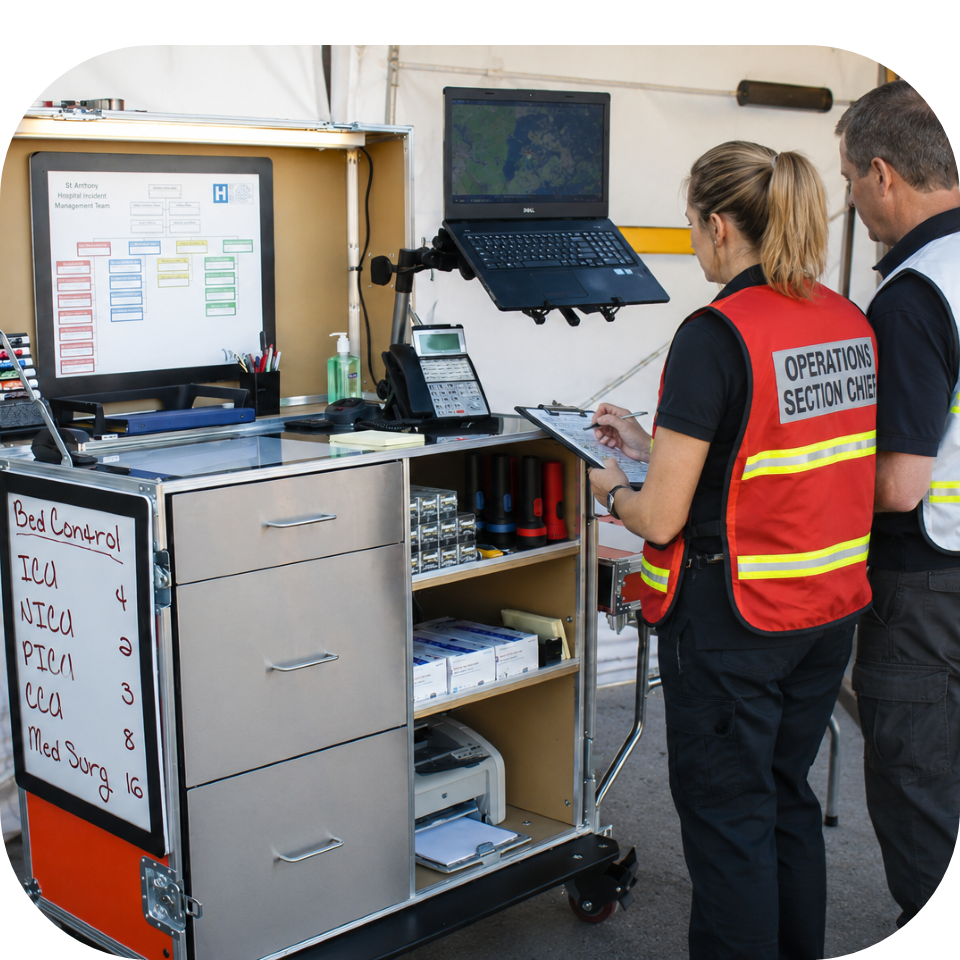
When an incident commander asks for a resource status report, the answer should be immediate, not buried in paperwork or scattered across multiple locations.
Response-Friendly™ HICS / MICC Systems organize forms, communication tools, reference materials, and operational resources into an intuitive command environment that improves visibility and coordination throughout an incident.
Everything responders need is where they expect it to be, reducing confusion as operational demands increase.
RESPONSE-FRIENDLY™ WORKSTATIONS
Organized Response Starts Here
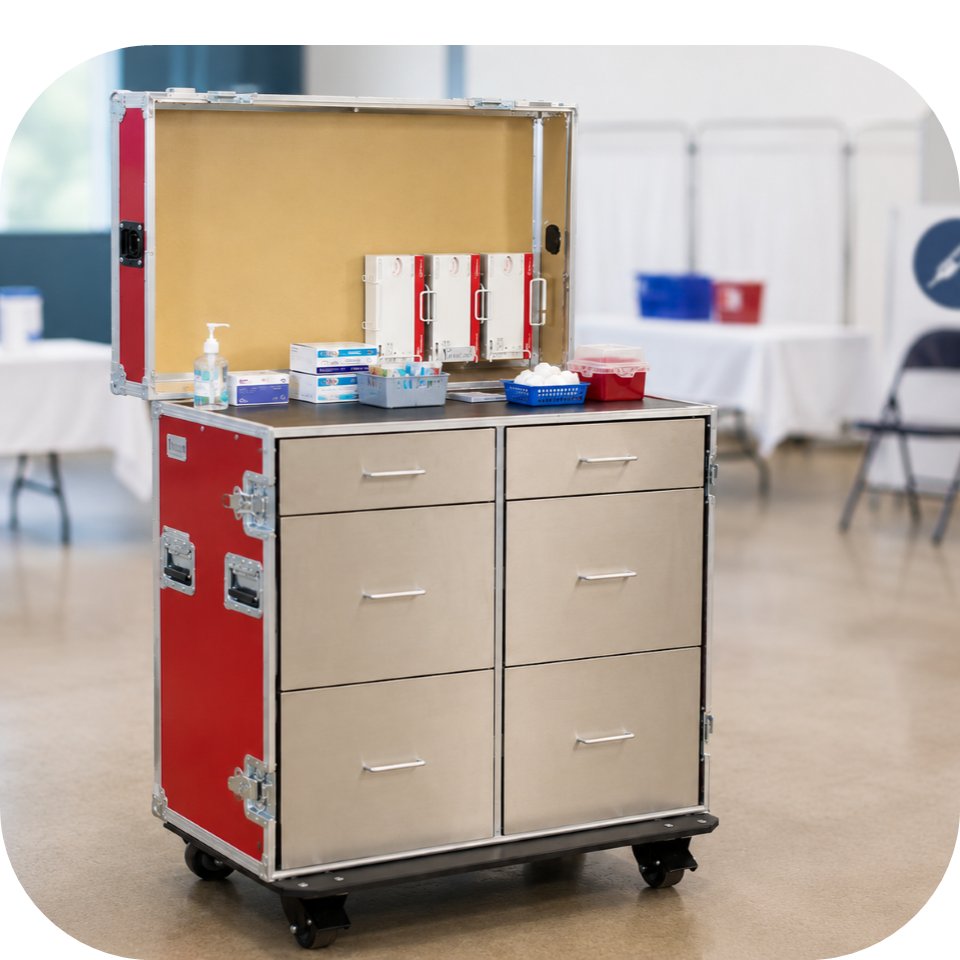
The first minutes of a deployment often determine how efficiently the rest of the operation unfolds. An organized workstation keeps essential equipment visible, accessible, and ready for immediate use.
Response-Friendly™ Workstations standardize setup, improve resource visibility, and create a consistent operational environment that supports rapid deployment across healthcare, emergency management, and public health operations. Personnel spend less time searching and more time responding.


