


What HPP Funding Will Actually Cover for Equipment
The surge exercise ended with a clear problem. The hospital could expand patient care beyond its normal footprint, but the team had to pull supplies from several storage areas, rebuild treatment stations, and lean on the few people who knew where everything was kept.
The obvious question after that is “What can we buy with HPP funding?” The better question is “What capability needs to improve, and what investment closes that gap?”
Hospital Preparedness Program funding focuses on healthcare readiness, not equipment shopping. The strongest equipment requests start with an operational need, move through planning and justification, line up with approved funding requirements, and only then reach procurement.
What Is HPP Funding?
The Administration for Strategic Preparedness and Response describes the Hospital Preparedness Program, or HPP, as the primary source of federal funding for healthcare delivery system preparedness and response. For Fiscal Year 2026, Budget Period 3 runs from July 1, 2026 through June 30, 2027, with $240 million available for HPP activities during that period.¹
HPP funding goes to 62 eligible recipients, including states, territories, freely associated states, and eligible major metropolitan areas. Those recipients work with and fund healthcare coalitions to strengthen readiness across the areas they serve.¹ ²
That structure matters for anyone thinking about an equipment purchase. HPP is not a direct equipment grant for individual hospitals or healthcare organizations. The current HPP Notice of Funding Opportunity states that funding must primarily support strengthening the healthcare delivery system through coalitions that collectively prepare and respond within the areas they serve.³
HPP Equipment Purchases Start with a Capability Need
Don’t start with a product. Start with something that didn’t work well enough. That may have surfaced during:
- A full-scale or functional exercise
- An After-Action Review
- A hazard or readiness assessment
- An actual emergency response
- Medical surge planning
- Resource-management planning
- Patient-movement planning
- An evaluation of existing equipment or infrastructure
The Medical Response and Surge Exercise is an annual HPP requirement for healthcare coalitions. It stresses healthcare response systems, surfaces preparedness gaps, and informs improvement planning.⁴
An exercise might reveal that a region cannot quickly stand up additional treatment capacity. A coalition may find that medical supplies exist but sit scattered across multiple locations. A hospital may find that stored preparedness assets need extensive repacking before anyone can deploy them. Each one is a capability problem, not a product problem.
Define the problem before naming the solution.
Instead of: We need twenty new treatment stations.
Start with: We need to establish additional treatment capacity with organized medical resources that personnel can deploy and sustain during a surge event.
The second version explains the operational requirement. It also gives you something to measure against preparedness goals before a specific product enters the conversation.

Step 1: Define the Capability Gap
A strong request starts by answering a few basic questions:
- What failed, slowed down, or proved difficult?
- How was the gap identified?
- Which organizations or populations does it affect?
- What happens if the gap remains unresolved?
- What response capability needs to improve?
- How will the organization know the improvement worked?
The current HPP cooperative agreement expects recipients and healthcare coalitions to identify readiness gaps through assessments, then use those findings to shape future activities and priorities. It also recognizes that jurisdictions need flexibility to address their own community needs.³
So the capability gap does more than justify a purchase. It ties the proposed investment to preparedness work already underway.
Step 2: Put the Need into the Preparedness Plan
Once the capability gap is clear, the next step is planning. This is where stakeholders work out how the improvement fits existing priorities, plans, and responsibilities.
For example:
- Who will own the capability?
- Which facilities or partners will use it?
- Where will the equipment be stored?
- How will it move when activated?
- Who needs training?
- How much capacity is actually required?
- How will supplies or components be maintained?
- What happens after deployment?
- How will the organization test the capability?
The HPP cooperative agreement connects assessments, planning, implementation, and exercises. Its work plan requirements expect proposed activities to support HPP’s purpose, core functions, strategic priorities, and performance objectives.³
Equipment makes more sense within that structure when planners can show which operational function it supports. A preparedness coordinator should be able to explain the purchase without reaching for a product brochure.
Step 3: Build a Defensible Equipment Justification
This is where a specific HPP rule applies. The current Notice of Funding Opportunity states that recipients generally may not use HPP funds to purchase furniture or equipment, and that any proposed equipment spending must be clearly identified and justified in the budget.³
So equipment is never automatically allowable just because it has a preparedness application.
The NOFO also requires budget narratives to explain why a cost is needed, how the amount was determined, and any calculations behind it. ASPR specifically tells applicants to pay close attention to justifying equipment and other high-cost requests, and the item must appear in the detailed work plan as well.³
A strong justification connects five pieces:
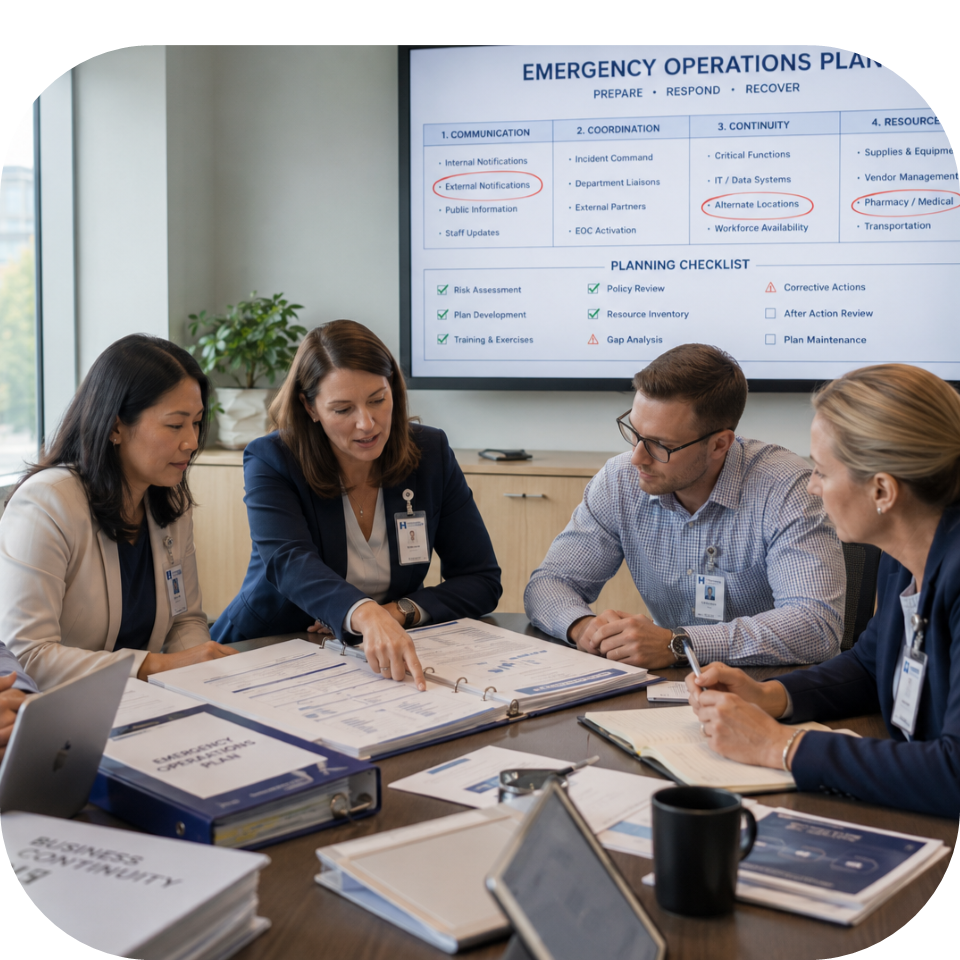
Capability gap → Preparedness objective → Proposed equipment → Implementation plan → Sustainment
For example…
The equipment is one piece of that. The capability is the reason for the purchase.
Step 4: Confirm the Funding Fits
Available HPP dollars don’t make a purchase allowable on their own. For Budget Period 3, ASPR has $240 million available nationally for HPP activities, but that money flows through HPP recipients and their established healthcare coalition structures.¹ ² Each proposed purchase still has to fit the recipient’s approved activities, budget, work plan, award conditions, and applicable funding requirements. The NOFO also requires prior approval for changes to an approved work plan or budget.³
Before spending real time on a quote or specification package, confirm the funding path with the appropriate HPP recipient, healthcare coalition, grant administrator, or other responsible authority. Have that conversation early.
Questions worth asking:
- Does this capability align with an existing HPP priority?
- Is the activity already included in the work plan?
- Can equipment be proposed for this activity?
- What justification does the recipient require?
- Are there local or state restrictions beyond the federal guidance?
- Does the purchase require additional approval?
- What documentation must be retained?
The goal is to settle funding fit before procurement starts.
Step 5: Move Into Procurement
Once the operational need, plan, justification, and funding path are set, the organization can start evaluating specific solutions. Depending on the organization and jurisdiction, procurement may include:
- Developing specifications
- Reviewing system configurations
- Comparing operational requirements
- Requesting quotes
- Confirming storage requirements
- Reviewing medical contents
- Evaluating training needs
- Confirming replenishment and sustainment
- Obtaining committee or leadership approval
- Following purchasing or competitive-procurement procedures
- Issuing a purchase order
The people involved change as the purchase moves along. A preparedness coordinator identifies and champions the need. Clinical staff review medical contents. Logistics evaluates storage and deployment. Finance or administration reviews cost. Procurement runs the purchasing process. That’s why planning ahead pays off. By the time anyone asks for a quote, most of the important decisions should already be taking shape.

Don’t Forget Sustainment
Equipment sitting in storage is not the same thing as readiness.
HPP’s Resource Management Plan requires recipients and healthcare coalitions to describe how they will acquire, store, and manage supplies, including the procurement, distribution, and resource-sharing structures used to meet healthcare needs. Appendix A (Hospital Preparedness Program Cooperative Agreement, EP-U3R-24-001) adds inventory-management protocols for cached material, policies for disposing of expired material, expectations for replenishing or replacing distributed material, and policies for distributing supplies.³ Sustainment belongs in the purchasing conversation from the start.
Before approving a preparedness system, ask:
- Who maintains the inventory?
- How will personnel know what belongs in the system?
- What expires?
- What needs inspection?
- How are consumed supplies replaced?
- Who owns the system after the original project ends?
- Can new personnel understand and deploy it?
- How quickly can it return to readiness after use?
A system nobody can maintain turns into the next preparedness gap.
A Better Way to Think About HPP Equipment Funding
The strongest HPP equipment discussions follow a logical progression:
- Capability Need. Identify what the organization cannot do reliably today.
- Planning. Define the operational improvement and connect it to preparedness priorities.
- Justification. Explain why the proposed equipment is necessary, how it will be used, and how the capability will be implemented and sustained.
- Funding. Confirm that the proposed activity and cost align with the recipient’s approved HPP plans and funding requirements.
- Procurement. Evaluate specific systems, obtain the required approvals, and complete the purchasing process.
Starting with the funding amount runs that sequence backward. Starting with the capability gives the purchase a reason to exist.
Turn the Capability Plan into a Deployable System
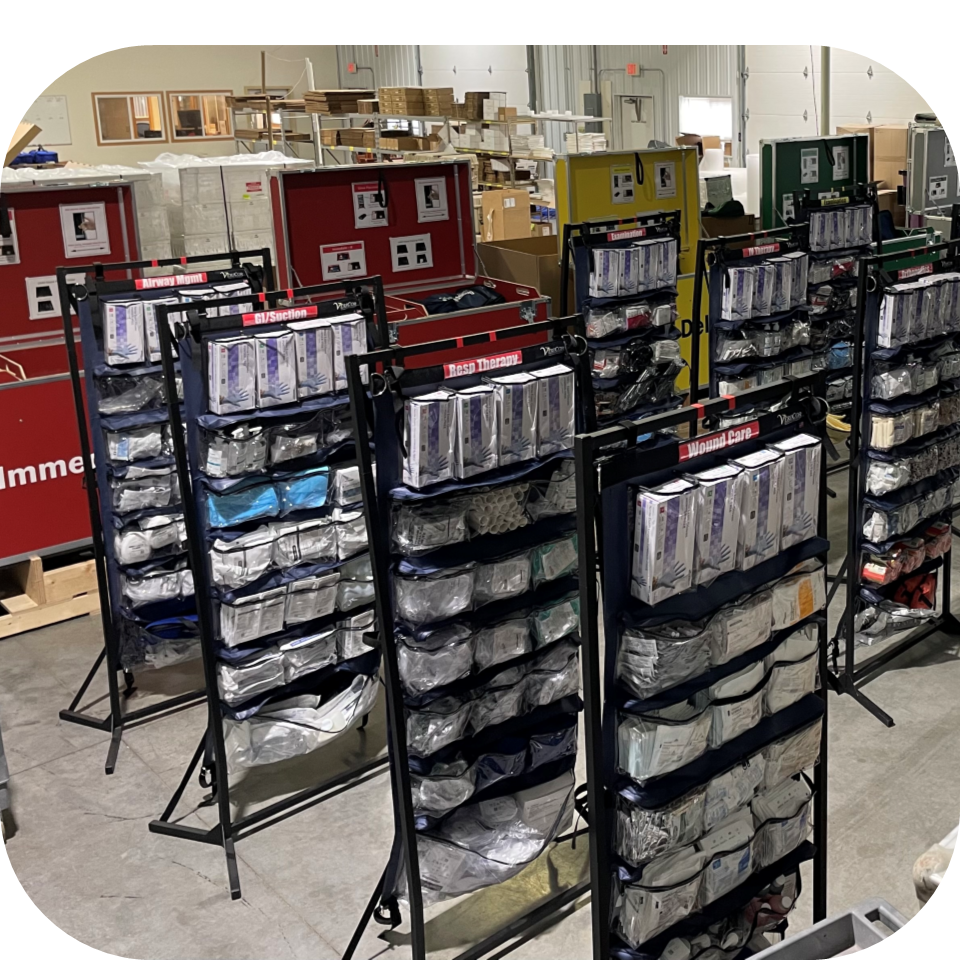
When an identified preparedness gap calls for physical equipment, decision-makers need enough information to understand what they’re buying and how the capability will actually operate once it arrives.
VeriCor’s Response-Friendly™ Medical Response Systems are complete, modularized systems for emergency response, medical surge, alternate care, vaccination operations, incident command, and other temporary clinical environments. For organizations evaluating a preparedness investment, we can provide system configurations, line-item contents, storage and deployment information, SmartBook™ system references, training options, and replenishment services to support justification and sustainment.
HPP recipients and healthcare coalitions decide whether a proposed purchase meets their funding requirements. We provide the operational detail you need to evaluate the system itself.
References
- Administration for Strategic Preparedness and Response. ASPR Releases the Fiscal Year 2026 / Budget Period 3 Hospital Preparedness Program Continuation Guidance. March 23, 2026.
https://www.aspr.gov/news-updates/newsroom/2026-03/releases-fiscal-year-2026-budget-period-3-hospital - Administration for Strategic Preparedness and Response. Cooperative Agreements.
https://www.aspr.gov/readiness-response/healthcare-readiness/cooperative-agreements - Administration for Strategic Preparedness and Response. Hospital Preparedness Program Cooperative Agreement, EP-U3R-24-001, Fiscal Years 2024-2028. 2024.
https://apply07.grants.gov/apply/opportunities/instructions/PKG00286501-instructions.pdf - Administration for Strategic Preparedness and Response. MRSE Recipient Review Guide.
https://www.aspr.gov/readiness-response/healthcare-readiness/performance-measures-guidance-reports/mrse-recipient-review-guide


