

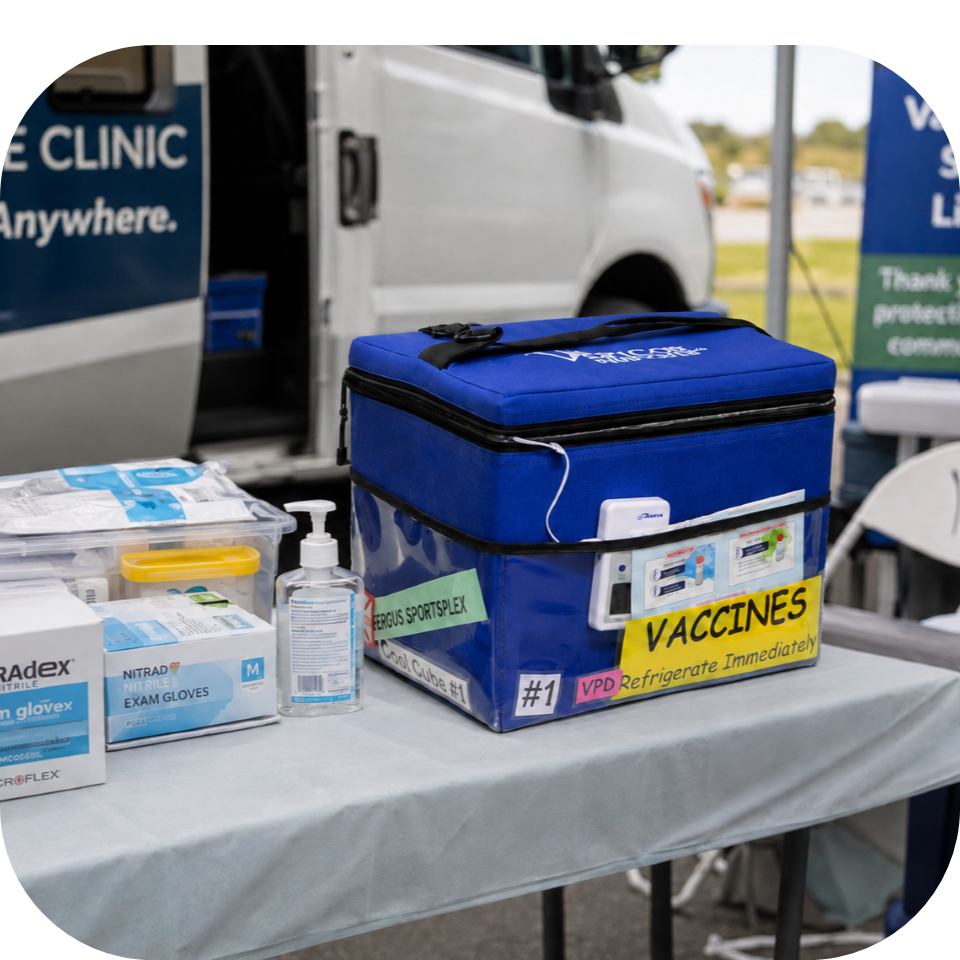
How Long Can Passive Medical Coolers Maintain Temperature?
A public health team packs a passive medical cooler at 7:00 a.m. for an off-site clinic. The schedule calls for six hours away from the main facility, but a vehicle delay stretches the day.
Now the real question is: How long will the cooler maintain the required temperature?
No single answer fits every passive medical cooler.
Depending on the container, thermal-control system, temperature range, payload, pack-out, and operating conditions, passive systems may maintain temperature for hours or days. The useful number is not the longest duration printed on a product page. It is the validated hold time for the specific configuration and temperature range you plan to use.
What Is a Passive Medical Cooler?
A passive cooler maintains temperature without powered refrigeration during use. The World Health Organization defines passive insulated vaccine containers as non-powered devices that use ice packs or other thermal-storage materials to control the temperature inside the compartment.¹
That thermal-control material may be water-based coolant, gel packs, phase change material, or another system matched to the application.
The important word is system.
The outer case, insulation, thermal-control material, payload, preparation method, and pack-out all work together. Hold time should describe the performance of that complete configuration, not one component by itself.
So, How Long Can a Passive Cooler Hold Temperature?
The answer can range from hours to multiple days, depending on the system and the conditions under which it was tested.
WHO’s current list of prequalified vaccine cold boxes and carriers illustrates how much duration can vary even within one class of passive containers. Each model has its own published cold-life result rather than sharing one category-wide duration.²
That is why a statement such as “holds temperature for 72 hours” is incomplete on its own. A defensible number should tell you the temperature range maintained, the container and thermal-control components used, how much product was inside, how the system was prepared and packed, what ambient temperatures surrounded it, what test profile was used, and what event defined the end of the hold time. Without those details, just a time rating may not describe comparable performance.
What Affects Passive Cooler Hold Time?
Several variables determine how long a passive medical cooler can maintain its required range.
1. The Required Temperature Range
A cooler is not simply trying to stay “cold.”
Vaccines, blood products, frozen materials, room-temperature products, and laboratory specimens may require different temperature profiles. A system maintaining 2-8 °C does a different job than one maintaining a frozen or controlled room-temperature range.
That means you can’t automatically apply the same number of hours across different temperature requirements.
Start with the material being transported and the range it must maintain. Then evaluate hold time within that specific profile.
2. The Ambient Temperature
A passive container does not operate in isolation.
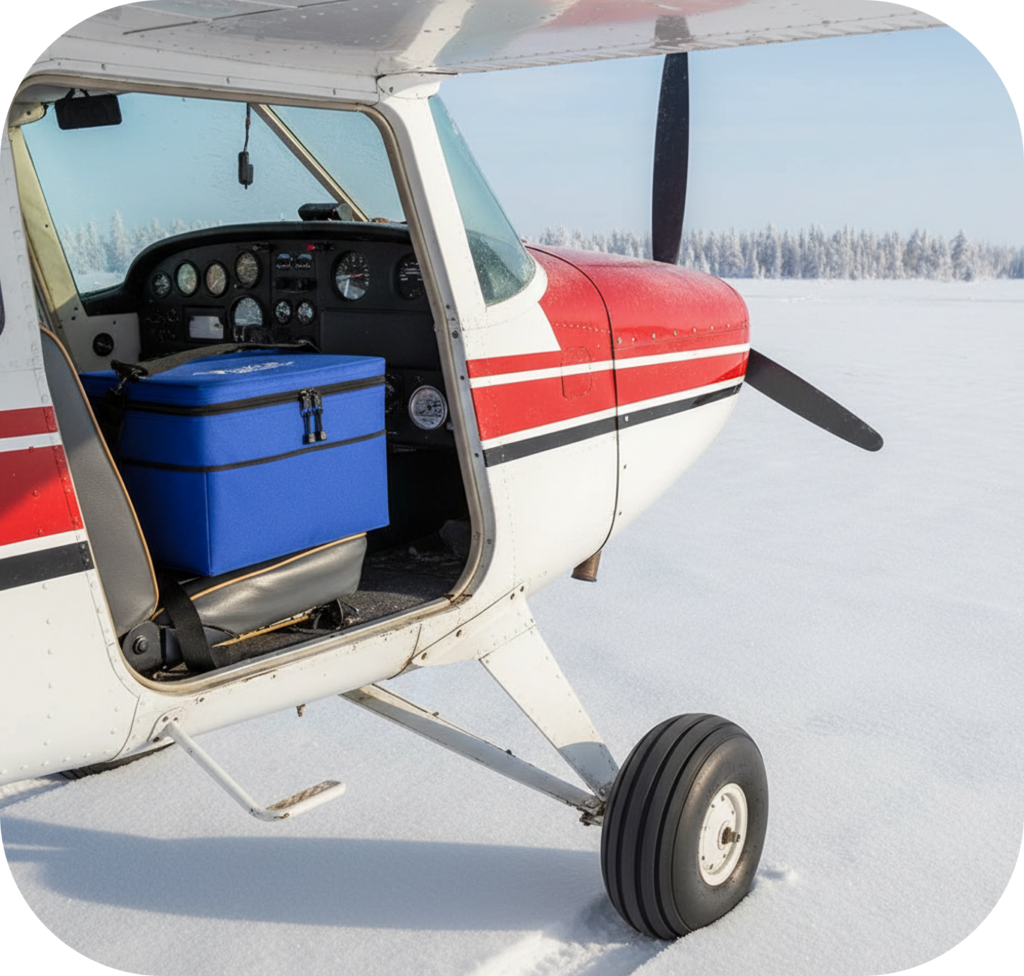
A cooler sitting in a climate-controlled vehicle faces different thermal conditions from one exposed to summer heat, winter cold, loading areas, vehicle stops, or repeated movement between environments.
WHO guidance for qualifying passive pharmaceutical transport containers specifically calls for accounting for the anticipated ambient-temperature profile over the transport route.³
A hold-time claim therefore means more when you know the outside conditions used during testing.
3. The Payload
What goes inside the cooler matters too.
WHO qualification guidance states that a passive packaging system should document the minimum and maximum shipping volume, weight, and thermal mass that it can safely accommodate.³
A nearly empty container and a fully loaded container do not necessarily behave the same way.
This is one reason payload belongs in the hold-time discussion. A validated duration should correspond to a defined pack-out rather than an unspecified amount of product.
4. Preparation and Pack-Out
A validated passive system depends on being prepared and packed as tested.
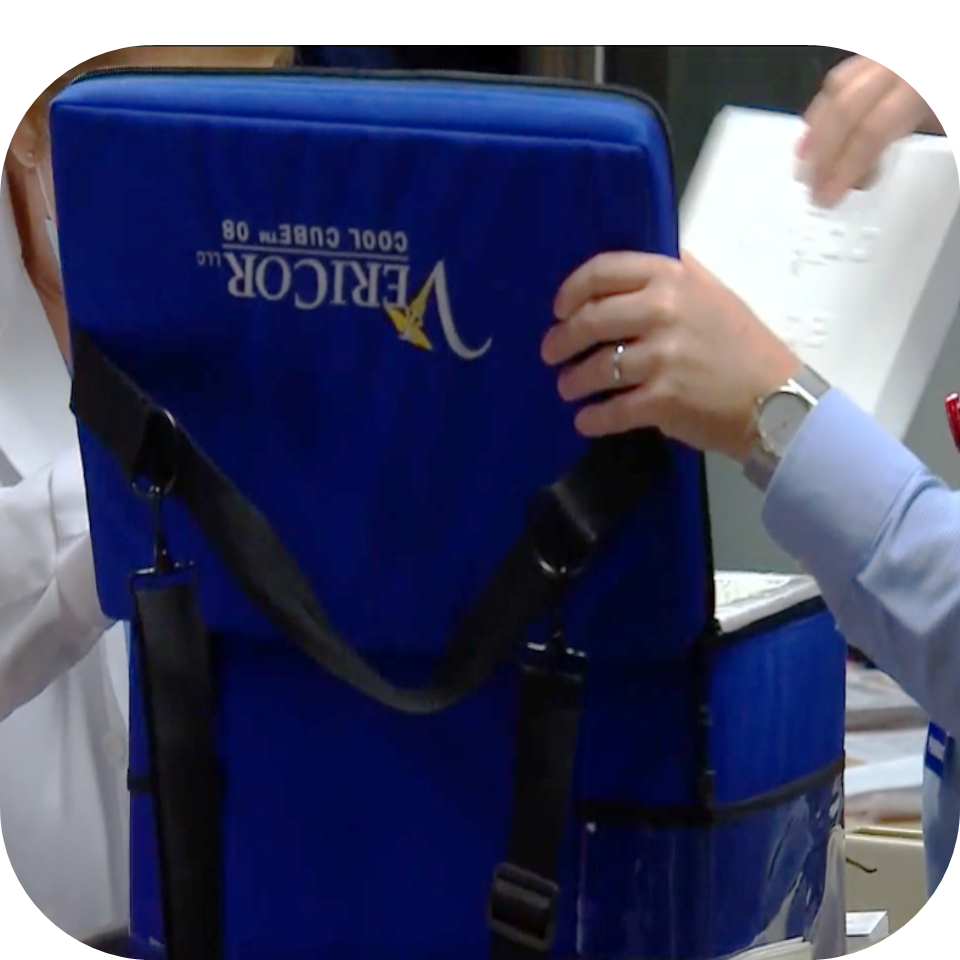
WHO’s qualification guidance calls for documenting the complete packaging assembly and thermal preparation regime.³ That documentation should cover the thermal-control materials and how they are prepared, the insulation, where the payload sits, any separators or other required components, where temperature monitors are placed, and the order in which the system is packed.
Changing the pack-out can change the thermal system.
A repeatable procedure matters because validated performance is only useful if staff can reproduce the configuration in actual operation.
5. How Often the Cooler Is Opened
Opening a passive cooler increases its exposure to the surrounding environment.
For vaccine transport and off-site clinics, CDC guidance specifically recommends keeping the portable container closed as much as possible.⁴
That does not mean one brief opening automatically causes an excursion. It means lid-opening behavior is part of the operating conditions that affect thermal performance.
Plan access before transport. If staff need product throughout the day, organize the payload so they can retrieve what they need efficiently.
6. The Exact Container Configuration
Different sizes and configurations can produce different hold times.
Insulation, internal volume, thermal-control material, payload space, and pack-out geometry all affect the thermal system.
This is why asking “How long does this brand of cooler hold temperature?” is usually too broad.
A better question is: “What is the validated hold time for this size, temperature profile, payload, pack-out, and test condition?”

Validated Hold Time Is Not Always the Same as Allowed Use Time
This distinction is especially important for vaccine transport.
A cooler may be capable of maintaining temperature longer than the operating period allowed by the guidance governing the product inside it.
CDC’s July 2026 Vaccine Storage and Handling Toolkit advises limiting total vaccine transport time, or transport plus the clinic workday when the vaccine remains in the portable container, to a maximum of eight hours unless the vaccine manufacturer provides different guidance.⁴
So, a container with a longer validated hold time does not automatically mean a vaccine should remain inside it for that entire period.
Product-specific handling guidance still controls.
The cooler provides temperature protection. It does not override the requirements for the material being transported.
Plan for More Time Than the Route Requires
A transport plan should not be built around using every available minute of thermal performance.
WHO guidance for vaccine transport recommends selecting a passive container with published cold life at least as long as the longest planned transport leg and allowing a safety margin for unexpected events such as delays.⁵
That principle translates well to medical transport generally.
If a route normally takes four hours, selecting a system with exactly four hours of qualifying performance leaves no room for traffic, vehicle problems, delayed handoffs, longer clinic operations, weather, schedule changes, or other real-world disruptions.
Hold time should create operational margin, not become a countdown clock.
What Does Validation Tell You?
A useful hold-time claim comes from testing that defines the conditions behind the number.
ISTA Procedure 7D is a temperature test for transport packaging that evaluates the effects of external temperature exposures on individual package-products.⁶
The value of that testing isn’t the procedure name itself. The value is knowing what was tested.
When reviewing passive medical cooler performance, look for documentation that identifies:
- The exact cooler or model
- The required temperature profile
- The complete thermal configuration
- The payload or test load
- The preparation and pack-out
- The external temperature test conditions
- The resulting hold duration
Without that context, a large hour number tells you less than it appears to.
How Should You Compare Passive Medical Coolers?
Do not compare hold-time numbers until you know the test conditions are comparable.
A 48-hour result for one temperature range, ambient profile, and payload is not automatically worse than a 72-hour result produced under different conditions.
Before comparing two systems, confirm they maintain the same temperature range, were tested under similar ambient conditions, and have comparable payloads. Check whether the stated duration applies to the complete system, what preparation each system requires, and whether the result is validated or simply described as expected performance. Confirm the duration covers the actual transport requirement with enough margin, and that staff can reliably reproduce the tested pack-out.
The best cooler for an operation is not necessarily the one with the largest number of hours.
It is the one whose documented performance fits the actual job.
How Cool Cube™ Hold Time Is Defined
Cool Cube™ does not have one family-wide hold time.
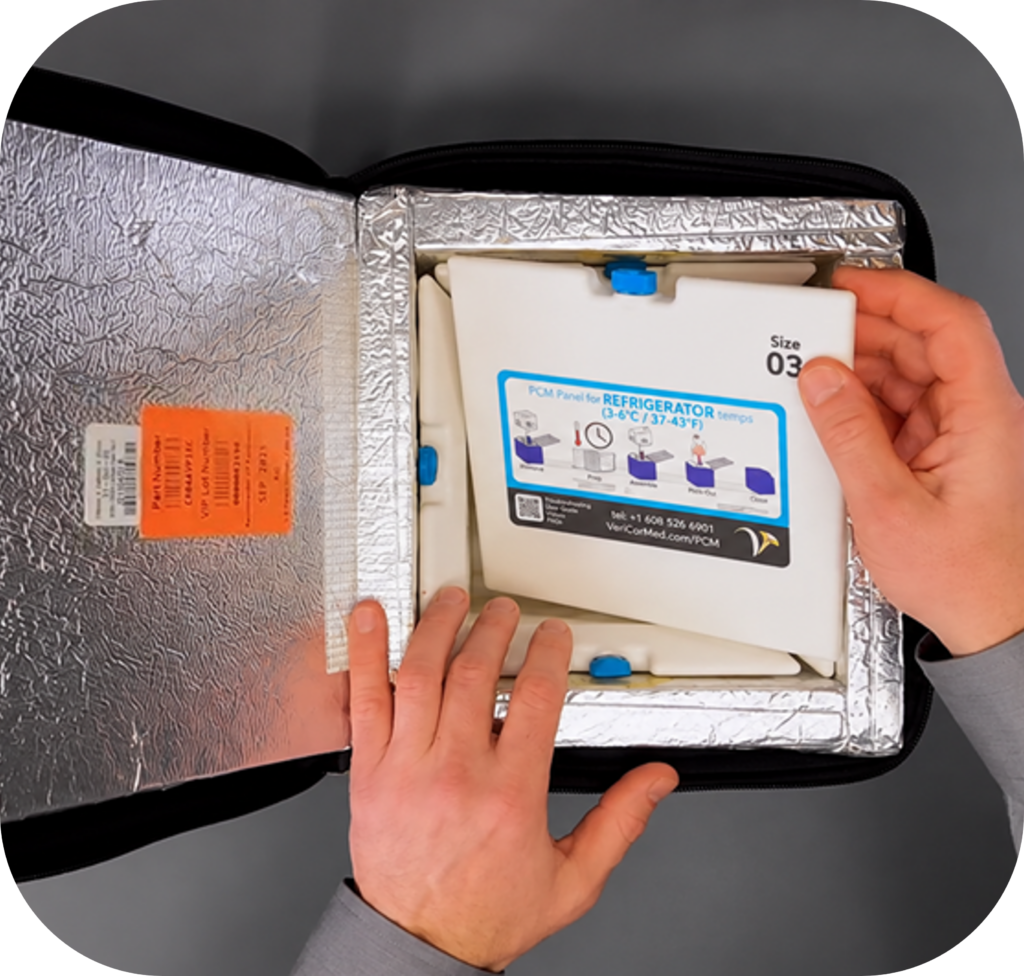
VeriCor determines hold duration from complete-system test data for the specific product line, size, temperature profile, configuration, and test condition. Testing evaluates the complete Cool Cube™ system, including the case, Temp-Shield™ vacuum insulated panels, applicable PCM panels, preparation, payload, and pack-out.
Cool Cube™ serves several medical transport applications:
- VT: Vaccines & Refrigerated Products, 2-8 °C
- BT: Blood Products, 1-6 °C or 1-10 °C
- FT: Lab-Freezer Transport, -50 to -15 °C
- RT: Room-Temperature Transport, 15-25 °C or 20-24 °C
Different temperature profiles and configurations require their own documented performance.
When evaluating a Cool Cube™, match the application first. Then confirm the required temperature profile, payload, expected transport duration, operating conditions, and qualifying configuration. That gives you a useful answer to the hold-time question instead of a family-wide number that may not apply to your transport.

The Right Hold Time Is the One Your Operation Requires
“How long can a passive medical cooler maintain temperature?” sounds like a question with one number for an answer.
It isn’t.
Hold time depends on the complete thermal system and the conditions surrounding it. A defensible transport plan matches a validated configuration to the required temperature range, realistic operating conditions, expected duration, and enough margin for the unexpected.
Do not ask only how many hours a cooler can last.
Ask whether those hours were proven under conditions that match the way you need to use it.
References
- World Health Organization. E004: Cold Boxes and Vaccine Carriers. https://extranet.who.int/prequal/immunization-devices/e004-cold-boxes-and-vaccine-carriers
- World Health Organization. IMD Listing Products E004: Cold Boxes and Vaccine Carriers. https://extranet.who.int/prequal/immunization-devices/imd-listing-products-e004
- World Health Organization. Model Guidance for the Storage and Transport of Time- and Temperature-Sensitive Pharmaceutical Products. WHO Technical Report Series No. 961, Annex 9. 2011. https://www.who.int/docs/default-source/medicines/norms-and-standards/guidelines/distribution/trs961-annex9-modelguidanceforstoragetransport.pdf
- Centers for Disease Control and Prevention. Vaccine Storage and Handling Toolkit. July 2026. https://www.cdc.gov/vaccines/hcp/downloads/storage-handling-toolkit.pdf
- World Health Organization. General Information: Vaccine Distribution Guidelines. https://extranet.who.int/prequal/immunization-devices/general-information
- International Safe Transit Association. Test Procedures: Procedure 7D, Temperature Test for Transport Packaging. https://www.ista.org/test_procedures.php


