

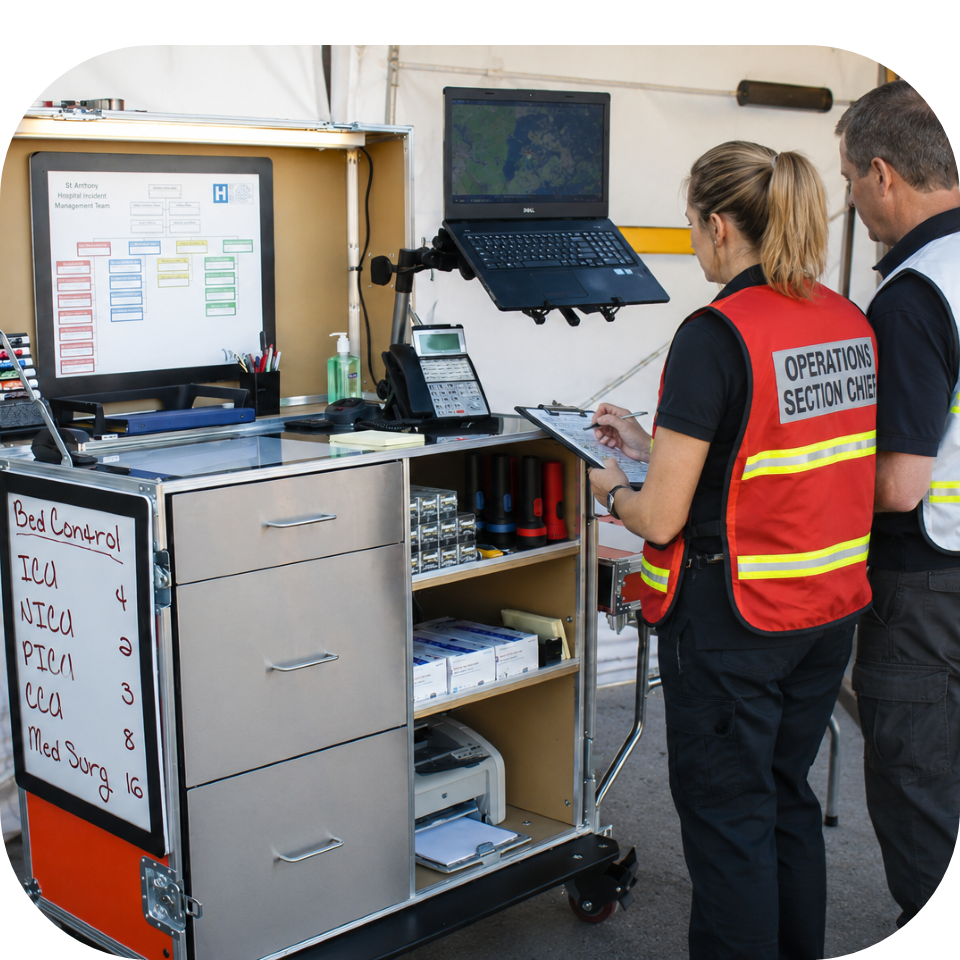
Why Resource Accountability Breaks Down During Emergencies
It’s an hour into a mass-casualty response. Patients are moving through triage, treatment areas are filling, and supplies that were neatly staged at the start of the day have already shifted several times. A child arrives with a compromised airway. The question comes… “Where’s the pediatric airway kit?”
One responder remembers seeing it near triage. Another thinks it’s in treatment. The inventory lists a kit, but no one can confirm its location. Multiple people start opening cases. Someone calls staging. Another responder checks a treatment area. The airway kit exists. The team just cannot put its hands on it.
It’s a resource-accountability failure.
During an emergency, accountability means knowing what resources are available, where they are, what condition or status they are in, who is responsible for them, and what happens to them as they move through the response. Resources may include personnel, teams, facilities, equipment, and supplies.¹ FEMA identifies tracking and reporting as part of incident resource management, along with mobilization, demobilization, and reimbursement and restocking.¹
Resource accountability can break down because the response moves faster than the systems used to organize it. The solution starts way before activation.
Resource Accountability Starts Before the Emergency
An incident is a poor time to discover that an inventory is outdated. FEMA guidance emphasizes maintaining current and accurate information about available resources before an incident occurs. That information supports planning, resource requests, deployment, tracking, and eventual recovery.²
If supplies have expired, equipment has moved, kits are incomplete, or ownership is unclear before activation, the response begins with bad information.
That creates immediate questions:
- Is the resource actually available?
- Is it ready for deployment?
- Where is it stored?
- Who owns it?
- Does it require maintenance, replacement, or replenishment?
- Can it support the function responders expect it to support?
A spreadsheet, database, or inventory platform cannot answer those questions reliably if the information inside it is wrong. Accountability begins with knowing what you actually have.
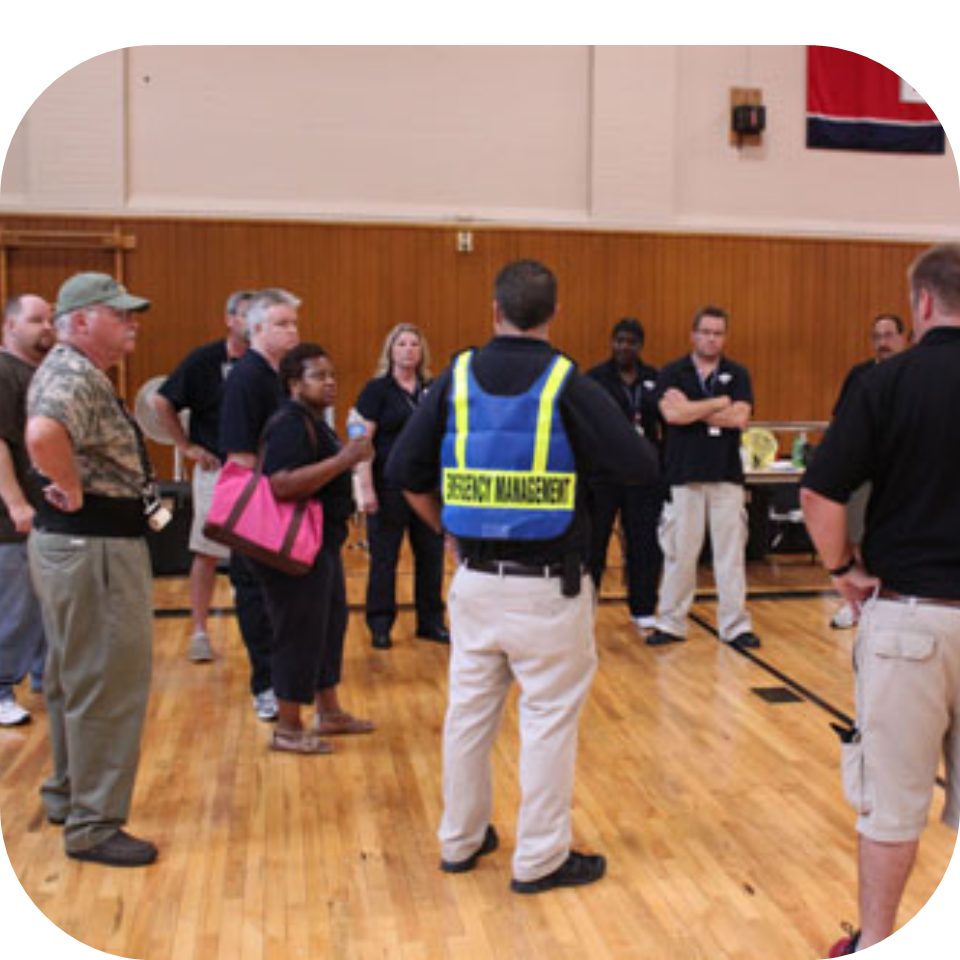
Why Does Resource Accountability Break Down During a Response?
Seven predictable problems make accountability harder as an incident grows.
1. Resources Are Identified Differently
One department calls something a “widget.” Another calls it a treatment kit. A third categorizes it by an individual component. That may be manageable during routine operations. It becomes harder when multiple organizations need to jointly request, deploy, share, and track resources.
NIMS addresses this problem through common terminology and resource typing. FEMA categorizes incident resources by characteristics such as capability, category, kind, and type so organizations have a common way to describe what is being requested and provided.³ These standard names, identifiers, and configurations reduce translation during a response.
2. Check-In Gets Bypassed
Resources begin arriving quickly, while personnel report directly to an assignment. Equipment comes off the truck before anyone records it. Teams hand off supplies because the need is immediate. The work happens, but the accountability record never catches up.
NIMS identifies check-in and check-out, resource tracking, incident action planning, unity of command, and personal responsibility as core accountability principles. FEMA’s ICS process uses formal resource check-in to establish accountability at an incident, and ICS Form 211 provides a standardized method for documenting the arrival of resources.³ ⁴
If a resource enters the operation without entering the accountability process, someone eventually has to reconstruct where it came from and where it went.
3. Location and Status Change Faster Than Records
Knowing that a resource arrived is not enough.
- Equipment moves.
- Personnel receive new assignments.
- A treatment module leaves staging.
- A generator goes out of service.
- A supply cache runs partially empty.
NIMS resource tracking follows resources through mobilization, assignment, status changes, and demobilization.³ Accountability breaks when physical movement happens without a corresponding information update. The inventory may still show that a resource exists. Operationally, no one knows whether it is available.
4. Multiple Organizations Create parallel Systems
Large responses rarely belong to one organization. Public health, hospitals, EMS, emergency management, healthcare coalitions, volunteer organizations, private-sector partners, and neighboring jurisdictions (coalitions) may all contribute resources, which expands capability. But it also expands the accountability challenge.
ASPR guidance for healthcare coalitions emphasizes information sharing, resource management, and coordination between healthcare organizations and response partners during emergencies.⁵ Because problems develop when each organization maintains its own information but no common process connects those records.
- One partner knows what it sent.
- Another knows what arrived.
- Operations knows where some of it went.
- Logistics knows what has been requested.
No one has the complete picture.
5. Unrequested Resources Enter the Response
Emergencies attract assistance. And sometimes people, equipment, donations, or supplies arrive without going through the established resource-request process. While more resources can sound helpful, unmanaged resources create additional work.
NIMS directs organizations to deploy resources through established request-and-dispatch procedures. FEMA warns that unrequested resources can burden incident management and complicate accountability.³ Every resource that enters the response needs an owner, status, location, purpose, and eventual disposition. Otherwise, additional capacity becomes additional confusion.
6. Consumable Supplies Disappear Differently Than Equipment
A portable workstation can be reassigned and tracked as one asset. Medical supplies behave differently. Gloves leave a case one box at a time. Dressings move into treatment areas. Teams consume IV supplies. PPE leaves by the box. Medications and other expendable items require replenishment. The original container may still be present, even though its operational capability has changed substantially.
FEMA’s resource-management process continues beyond deployment through demobilization, reimbursement, and restocking.¹ Resource accountability therefore needs to address both where an asset is and what remains available for use. A kit that is physically present but missing critical contents is not the same resource it was at activation.
7. The Accountability Process Has Never Been Tested Under Pressure
A resource-tracking procedure may look complete on paper. The real test is whether personnel can use it when resources are moving, staffing is stretched, communications are busy, and priorities keep changing. Exercises expose practical problems that planning documents often miss.
- Who records a transfer?
- What happens when the primary tracking system is unavailable?
- Can someone unfamiliar with the cache identify its contents?
- How are depleted supplies reported?
- Who updates resource status?
- How does a resource return to inventory after demobilization?
Finding those problems during an exercise is far better than discovering them during activation.
Accountability Follows the Resource Through the Response
FEMA’s resource-management process does not stop when equipment arrives at an incident. The NIMS resource-management cycle includes identifying requirements; ordering and acquiring resources; mobilizing, tracking, reporting, and demobilizing them; and completing reimbursement and restocking.³
That matters because accountability is not one inventory check. The resource has to remain understandable as it moves. Teams need to know what is available before deployment, where resources belong when they mobilize, what changes during use, and what must be replenished or restored before the system returns to readiness. This is where the physical organization of a preparedness system becomes part of the accountability process.
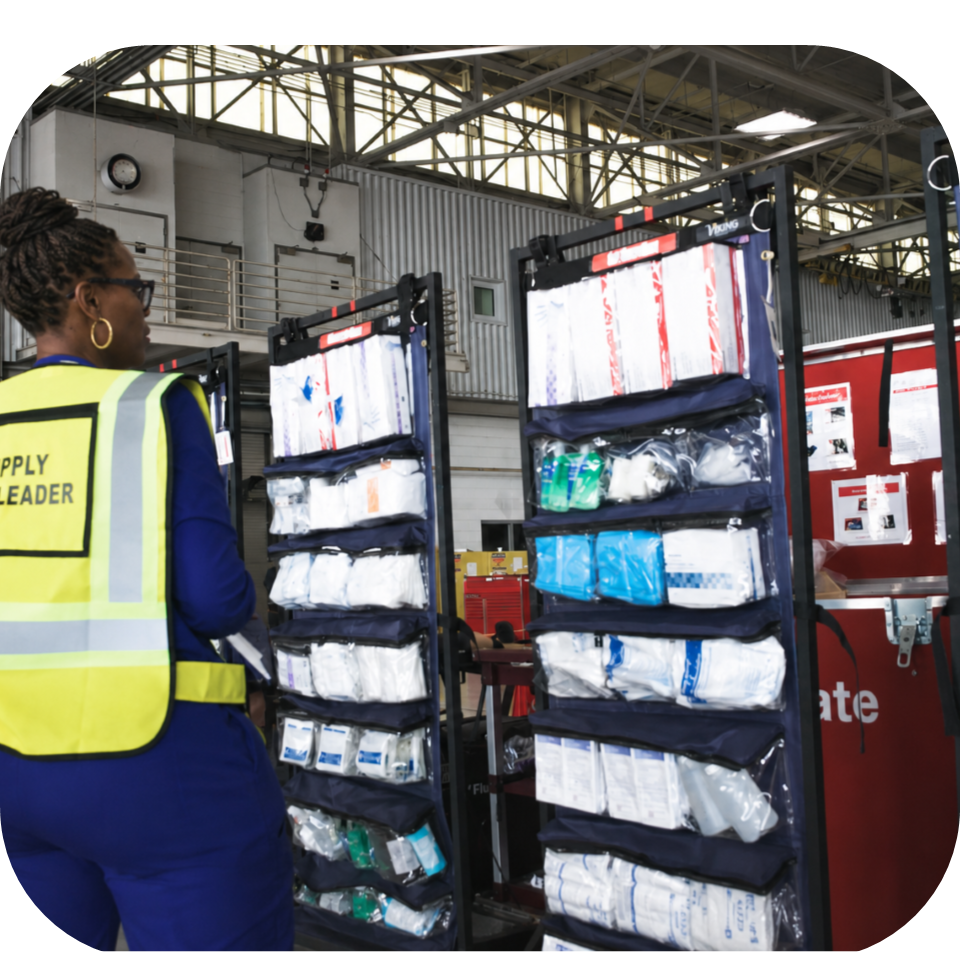
How Do You Improve Resource Accountability?
Strong resource accountability does not require adding more complexity. It requires removing ambiguity before pressure arrives.
1. Keep the Inventory Current
Know what exists before deployment. A preparedness system should make inventory understandable to the people who will actually use it. Record meaningful information such as resource identity, quantity, location, manufacturer, lot/serial number, expiration, maintenance status, and other details necessary to determine whether the resource is actually available. FEMA’s current resource-management guidance specifically emphasizes maintaining accurate resource information before incidents occur.²
How VeriCor addresses it: Any VeriCor Response-Friendly™ System has a corresponding Smartbook™ that is an organized printed and digital reference of system contents (and all critical data), supporting inventory visibility and resource accountability. Instead of relying entirely on someone’s memory of what should be inside a system, teams have a defined reference for what belongs where.
2. Standardize What You Can
Standardize names, identifiers, kit configurations, labels, and resource categories. When similar medical resources are organized differently from case to case or location to location, responders have to relearn the system every time they open it. Standardization removes that unnecessary decision-making.
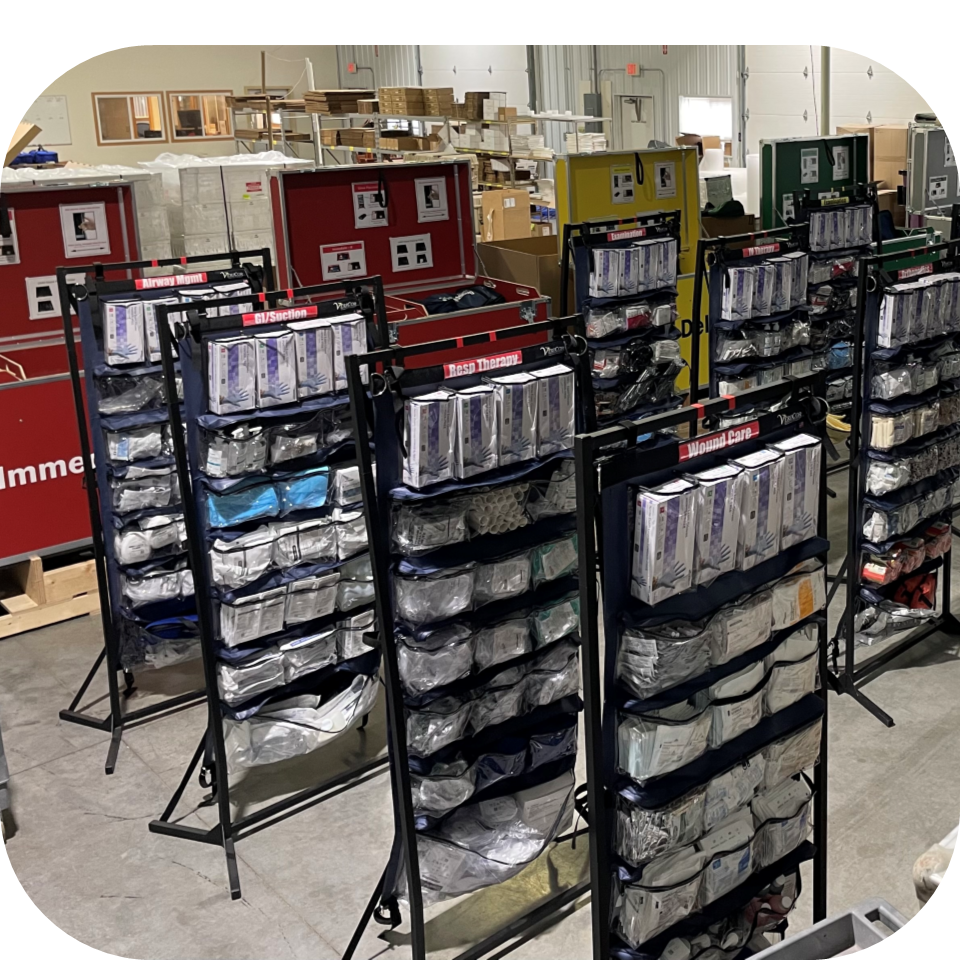
How VeriCor addresses it: VeriCor Response-Friendly™ Systems organize resources into standardized, configurable modules based on operational function. Responders can work from a consistent structure rather than searching through unrelated containers for what they need. The physical organization reinforces the documented organization.
3. Establish One Accountability Process
Define who owns resource tracking. NIMS assigns formal tracking responsibilities within the incident organization, including maintaining resource status information.³ Organizations do not need every person to maintain a separate record. They need a clear process for delivering accurate information to the people responsible for maintaining the operational picture.
How VeriCor addresses it: Response-Friendly™ Systems do not replace ICS, NIMS, or an organization’s formal accountability process. They give that process a more organized physical foundation. A Smartbook™ provides a common resource reference, while standardized modules make it easier for personnel to identify what they are working with and communicate about it consistently.
4. Track Movement, Status, and Consumption
A useful accountability process needs to answer three different questions:
- Where is it?
- Can we use it?
- How much remains?
Those answers change as the response changes. A medical kit may still be sitting in the treatment area, but if critical supplies have been consumed, its operational status has changed.
How VeriCor addresses it: Standardized system contents make those changes easier to recognize. The Smartbook™ provides inventory visibility and a clear reference of what the system contains and what may need attention as resources are used. “Resupply cases” provide additional high-use consumables to personnel in the field. The Response-Friendly™ System supports accountability by giving teams a structured reference for the resources assigned to the system.
5. Plan for Demobilization Before Deployment
Accountability does not end when the response ends. Teams still need to return, inspect, reconcile, replenish, repair, or replace resources. FEMA includes demobilization and restocking within the incident resource-management cycle.¹ The easier it is to determine what belongs in a system, the easier it becomes to identify what did not come back or what was consumed. The goal is not simply to put equipment back into storage. It is to know that the system is ready to deploy again.
How VeriCor addresses it: Response-Friendly™ Systems provide a known configuration to return to after deployment. You’ll have the list… you’ll just need to replenish it. VeriCor offers Replenishment Services to support this step by replacing consumed or expired supplies, allowing the system to return to readiness.
A Simple Resource-Accountability Test
Before your next exercise or activation, choose one critical resource and ask:
- Can personnel confirm that it is available?
- Can they locate it quickly?
- Can they identify what is inside without searching through multiple containers?
- Can they tell whether anything is missing?
- Can they track where it goes after deployment?
- Can they determine who is responsible for it?
- Can they identify when it needs replenishment?
- Can they return it to a known state of readiness afterward?
If those answers require several phone calls, different spreadsheets, or someone who “just knows where everything is,” the accountability process still depends too heavily on individual knowledge. That becomes difficult to scale under pressure.
Build Accountability into the System Before the Incident
Resource accountability becomes harder when organization exists only in a spreadsheet, binder, or one person’s memory. The physical system matters too. VeriCor Response-Friendly™ Systems organize resources into standardized, configurable modules. Each Smartbook™ provides personnel with a defined reference. Replenishment Services provide a path back to readiness after supplies are used. Together, those pieces address a practical part of the resource-management cycle: know what you have, know where it belongs, recognize what changed, and restore the system after deployment.
When someone needs the pediatric airway kit, the answer should not depend on who last remembered seeing it… they should know where to find it.
Explore Response-Friendly™ Medical Systems
References
- Federal Emergency Management Agency, U.S. Fire Administration. National Incident Management System: Resource Management.
https://www.usfa.fema.gov/a-z/nims/resource-management.html - Federal Emergency Management Agency. Resource Inventorying, National Resource Hub.
https://preptoolkit.fema.gov/web/national-resource-hub/resourceinventorying - Federal Emergency Management Agency. National Incident Management System, Third Edition. October 2017.
https://www.fema.gov/sites/default/files/2020-07/fema_nims_doctrine-2017.pdf - Federal Emergency Management Agency, Emergency Management Institute. ICS Resource Center: ICS Forms.
https://training.fema.gov/emiweb/is/icsresource/icsforms/ - Administration for Strategic Preparedness and Response. Health Care Preparedness and Response Capabilities for Health Care Coalitions. 2024.
https://asprtracie.hhs.gov/technical-resources/resource/3896/health-care-preparedness-and-response-capabilities-for-health-care-coalitions


